5 espresso profiles for light roasted coffee beans
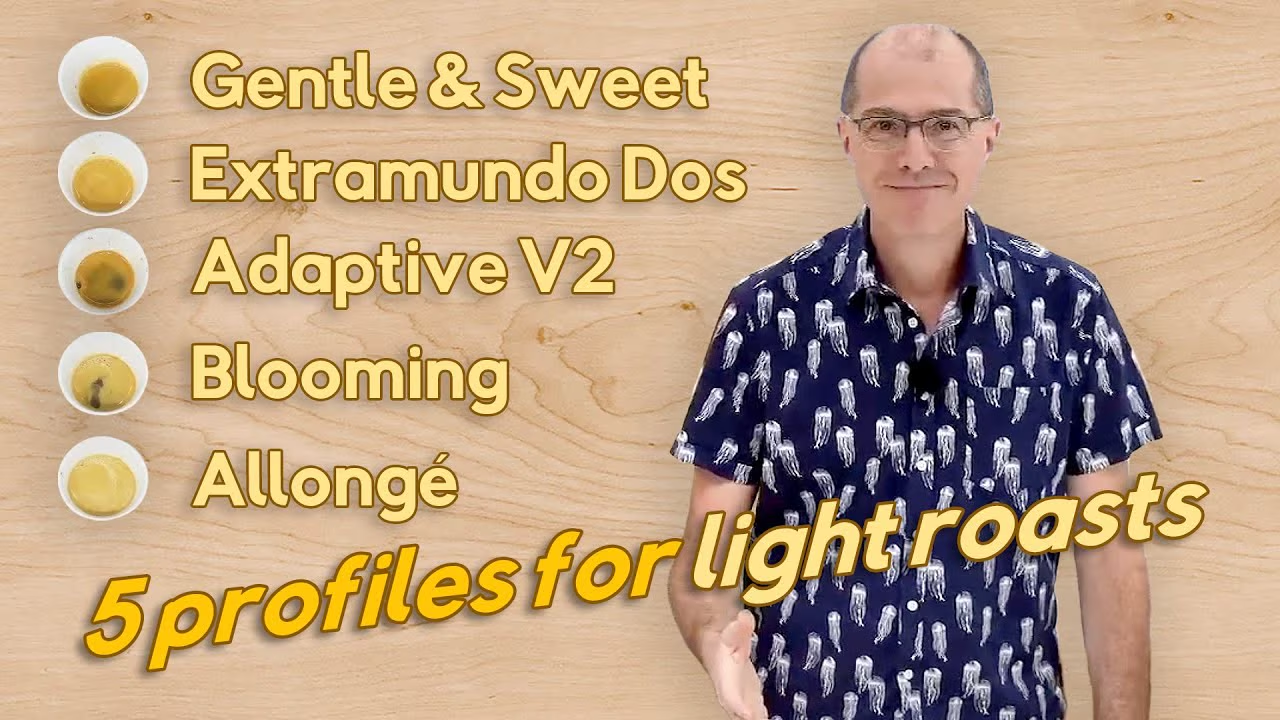

If you've ever wondered how to use profiling to make the best espresso from light roasted beans, this video will explain that.
We try the same light roasted bean, making coffee with five different profiles. How to dial each profile in, and how each profile tastes when it's not dialed in right.
We explain to you the flavor that comes out of each profile.
This is the order in which we make each espresso, in increasing amount of coffee extraction. We put Allongé at the end as it's mid-way between an espresso and filter coffee and thus in a different category from the other profiles.
We use 18g doses in an 18g Decent basket. The bean is Chelchele from L'Alchimiste in Bordeaux, and we use a 98mm flat burr "FM Grinder" at its lowest RPM setting (500).
We also have a video about 5 profiles for dark roasted beans and 5 profiles for Medium Roasted Beans.
For this video, we used the Decent Espresso machine.
Here is a blog post based on the transcript, focusing on light-roasted espresso and the five most common Decent profiles.
Light Roast Espresso: 5 Profiles, One Bean, and What We Learned
Light-roasted coffee is the holy grail for many espresso enthusiasts. It promises bright fruit, complex acidity, and none of the "baker's chocolate" or burnt notes of darker roasts. But it's also notoriously difficult to extract, with unpleasant acidity often the dominant flavor.
We set out to tame light roasts using a large, flat burr grinder (98mm, low RPM) and five popular Decent Espresso profiles. We used the same bean—Chelchele from L'Alchimiste in Bordeaux, France—a light but not ultra-light washed coffee with no roast or cocoa flavors.
Here's what happens when you go from under-extracted to over-extracted, and which profiles actually deliver the best cup.
The Setup: Grinding for Clarity, Not Body
Before the shots, a few strong recommendations for light roasts:
We kept a consistent 18g dose and varied only the profile and grind size. The five profiles, ordered from least to most extraction:
Profile 1: Gentle & Sweet – The Training Wheels
Extraction: ~18-19% TDS
Time: Fast flow (2-3 ml/s), ~25 sec
Grind: Finest of the day
This profile is the one Decent recommends for your very first shot. It's a traditional espresso at 6 bar instead of 9. Lower pressure means less channeling—crucial for light roasts that resist puck integrity.
Tasting notes: Peach, red apple, ripe fruit. Surprisingly gentle, low intensity, easy to drink. Acidity under control.
“If this was your first Decent shot with light-roasted beans, you'd be very pleasantly surprised.”
Verdict: A perfect starting point. Not the most exciting, but reliable and forgiving.
Profile 2: Extramundo Dos – The Crowd Favorite
Extraction: Slightly higher than Gentle & Sweet
Key difference: Adds a short pre-infusion (a few seconds of soaking before pressure)
Even though the grind was the same as Gentle & Sweet, the pressure didn't hit 6 bar as easily. Pre-infusion reduces puck resistance, so you'd normally need to grind finer. But we didn't—and the result was surprisingly good.
Tasting notes: Way more pronounced acidity. Juicier, fruitier, “bitey-er.” Shorter aftertaste than Gentle & Sweet.
When Scott Rao and I toured Europe, light-roast fans consistently named Extramundo Dos as their go-to profile.
Verdict: A clear step up in flavor intensity. Highly recommended for everyday light roasts.
Profile 3: Adaptive v2 – The Sweet Spot
Extraction: ~22-23% (if pulled longer)
Key feature: Long pre-infusion with no pressure (water is turned off, pressure drops naturally), then an adaptive rise to ~6.8 bar
Adaptive v2 was originally designed for medium roasts. For light roasts, the trick is to let the puck soak without pressure—otherwise water gushes through when you finally ramp up.
We pulled two versions: a shorter 1:1.8 ratio (18g in, 33g out) and a longer 1:2.3 ratio (42g out).
Shorter ratio (winner):
“For me, that was the ideal light-roast espresso. The holy grail.”
Longer ratio:
“If you're a filter coffee fan, you might prefer this. I don't.”
Verdict: Adaptive v2 at a 1:1.8 ratio was the best shot of the day. It balanced fruit, body, and acidity perfectly.
Profile 4: Blooming – The High-Risk, High-Reward Extreme
Extraction: 24-28% (crazy high)
Key feature: Extremely long, pressure-less pre-infusion (up to 30+ seconds of dripping), then a pressure ramp
Blooming is famous from Scott Rao's World of Coffee demo (28% extraction!). But it's also the hardest profile to dial in.
We struggled. Our first grind was too fine—barely any dripping, pressure hit the max, and the shot was “very muted, unexciting.” We went coarser three times before getting something drinkable.
At the right grind (1.0 on our scale):
“If you are frustrated by puck prep or your grinder, just do not do Blooming. It's the hardest shot to get right. If you only have 250g of beans, please do not try Blooming.”
Pro tips for Blooming:
Verdict: Impressive if you nail it, but too finicky for daily use. Save it for special beans and plenty of practice.
Profile 5: Allongé – The Long, Fast, Hot Shot
Extraction: ~22-23% (back down from Blooming)
Key feature: 4.5 ml/s flow rate, high temperature, large volume (often 1:3 or more)
Allongé is essentially a very long, fast espresso. It's the hottest shot because water flows so quickly it doesn't cool down. The result is about twice the strength of filter coffee—stronger than drip, gentler than traditional espresso.
Tasting notes: Gentle, slightly muted, not especially acidic. Pleasant but not wow-inducing.
“I'd want to use something with crazy fruitiness—a natural fermentation. This clean washed coffee doesn't shine here.”
Verdict: Great for fruit-bomb naturals or anaerobic processed beans. For a classic washed light roast, it's fine but unspectacular.
The Final Ranking (Mark & John's Picks)
1 | Adaptive v2 (short ratio) - Perfect balance of fruit, body, acidity
2 | Extramundo Dos - Bright, juicy, reliable
3 | Gentle & Sweet - Safe, smooth, great for beginners
4 | Allongé - Good for funky beans, meh for washed
5 | Blooming - Too hard to dial in; amazing when perfect, but rarely
Key Takeaways for Light Roast Espresso
And remember: light roasts want either a long pre-infusion or fast flow. The middle ground is where trouble lives.
Beans: Chelchele (L'Alchimiste, Bordeaux). Grinder: 98mm flat burrs at lowest RPM. Machine: Decent Espresso DE1.
#fm #blooming #allonge #adaptive #extractamundo #gentle #gentleandsweet #chelchele #alchimiste #dialin #dialingin #largeflat #largeburrs
john created 2025/04/22, john updated 2026/05/04